


Kelly McEvers
Kelly McEvers is a two-time Peabody Award-winning journalist and former host of NPR's flagship newsmagazine, All Things Considered. She spent much of her career as an international correspondent, reporting from Asia, the former Soviet Union, and the Middle East. She is the creator and host of the acclaimed Embedded podcast, a documentary show that goes to hard places to make sense of the news. She began her career as a newspaper reporter in Chicago.
-
The Oscar-nominated documentary Bobi Wine: The People's President is the gripping story of Ugandan singer Bobi Wine and his campaign against the country's long-standing president.
-
 In 1990, Mitch McConnell returned a $1,000 campaign donation from Donald Trump, who was in severe financial trouble. It's a view into a complicated relationship between two very different politicians.
 -
 Nageeb Alomari is an American citizen from Yemen. When the civil war started there, Alomari decided to bring his wife and daughters to the U.S. But then President Trump imposed the travel ban.
 -
This summer, the Supreme Court upheld the Trump administration's travel ban, meaning people from Libya, Iran, Somalia, Syria, Yemen, North Korea, and Venezuela cannot get visas to the U.S. But there is an exception: waivers.
-
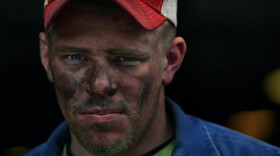 Donald Trump promised coal miners: "You're going to be working your asses off!" NPR spent more than a year in the coal counties of central Appalachia and found hope, cynicism and some surprises.
 -
 NPR's Embedded asks what the special counsel's track record could suggest about the road ahead for the special counsel, the White House and Congress.
 -
The name "George Papadopoulos" became associated with Donald Trump in March of 2016, when the then-presidential candidate listed him among his foreign policy team. Now, nearly two years later, Papadopoulos has pleaded guilty to lying to the FBI, and is believed to be the reason for the start of the Russia investigation.
-
 Simona Mangiante is defending her future husband, George Papadopoulos, and is telling a much different story than the one coming from the White House and from allies of President Trump.
 -
 The story of the standoff between federal agents and a fringe religious group called the Branch Davidians — suspected of stockpiling weapons — is now being retold in a six-part miniseries.
 -
Matt de la Peña's new children's book covers the good and the bad of everyday life. He says, "I had to be honest that there are going to be these things in life that are tough and that are dark."


